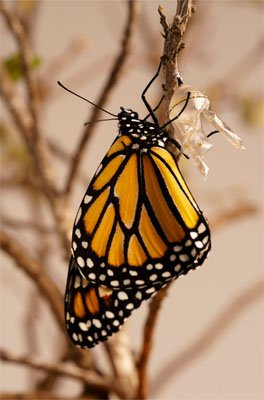
Eclose
A Magical Transformation
At the invitation of National Park Ranger Mia Monroe, Little Fluffy Clouds began raising Monarch butterflies in our animation studio. After experimenting with several locations throughout the space, we eventually created a quiet sanctuary on a small table tucked just inside the front door.
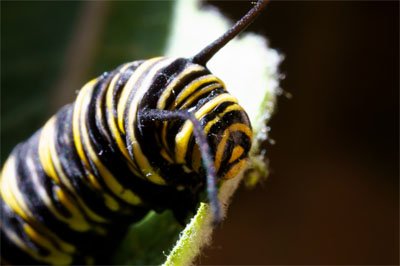
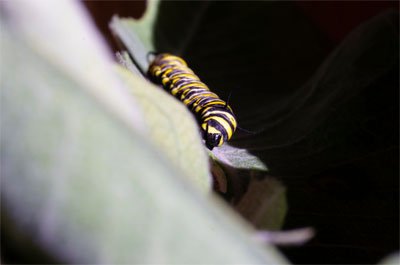
Using old juice jars stuffed with branches, for the caterpillars to hang off, and Milkweed, supplied by Dragon's Gate of Green Gulch Zen Centre, for them to feed off, we filmed our many caterpillars in all stages of their glorious transformation from larvae to butterfly. This metamorphosis is called ECLOSE.
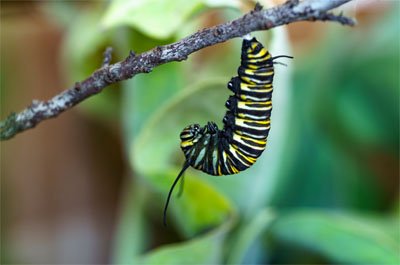
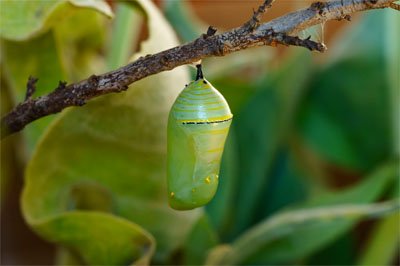
Caterpillars are fascinating and funny creatures. They can stay still on a branch for days on end or move into sudden hyperdrive and have you hopping all over the room to catch them as they seek out places to hang from and "J" prior to forming their jewel-like, gold dotted cocoons from which they will eventually emerge as fully formed Monarch Butterflies.
Our Monarchs were named. Louis (Pasteur), Marie (Curie), Schrödinger (who ate his brother, Cat and became the largest one to emerge and take flight) and others who perished or survived to take flight in that later summer. We watched over them in all stages as fretful as parents-to-be are wont to do. We saw them flutter and dry their slicked wings before they gingerly moved them in a ritual preparation for the eventual journey south.
With wings dried, strong and ready we carefully carried each one out into the garden on the flat of our hands, basking one more time in their beauty, and bade them a safe journey as we launched them upwards and on to their wintering grounds.
ECLOSE is the film that we made to capture the majesty of this moment so we can all marvel at the essence of the natural world.
Jerry van de Beek
On the production of ECLOSE
When we started on this project and I was setting up the camera I was wondering, how long does this process actually take? Is it going to be hours or just a couple of minutes? I did some research but couldn’t really find any answers, so we just went ahead and set up the camera to shoot in a time lapse of 1 frame every 4 seconds.
What you see in the video is a lot quicker than real time but we placed the real lapsed time in the bottom right corner to show how long the transformation actually takes. It was faster than I anticipated. Were I to do it again I'd probably shoot 1 frame every second.